Skip to content

Travel is no longer just about moving from one destination to another. Smart Tourism & Future Travel Experiences
It has become an ecosystem powered by data, artificial intelligence, automation, and immersive technologies that reshape how we explore the world. This new era is called Smart Tourism—and it is transforming everything we know about travel.
From AI-powered hotel check-ins to smart airports that recognize your face, from AR-guided museum tours to fully personalized travel itineraries generated in seconds, the future of tourism is no longer science fiction. It is happening right now.

As a travel journalist observing this transformation across global destinations—from Dubai’s smart city ecosystem to Singapore’s digital infrastructure and Japan’s robotic hospitality—one thing becomes clear: the traveler of the future will experience cities, not just visit them.
This guide explores how smart tourism is reshaping global travel, what future experiences look like, and how destinations are evolving to meet the expectations of next-generation travelers.
Quick Answer
Smart tourism and future travel experiences use AI, IoT, robotics, AR/VR, and data-driven systems to create personalized, efficient, and immersive journeys for travelers. It includes smart airports, digital hotels, contactless services, and immersive tourism experiences powered by advanced technology.

Table of Contents
- What is Smart Tourism?
- Evolution of Travel Technology
- AI in Tourism Industry
- Smart Airports & Seamless Travel
- Smart Hotels & Robotics
- AR & VR Travel Experiences
- Smart Cities and Tourism
- Personalized Travel Planning
- Sustainable Smart Tourism
- Future Travel Trends 2026–2030
- Real-World Smart Tourism Examples
- Pros & Cons of Smart Tourism
- FAQs
- Final Thoughts
What is Smart Tourism?
Smart tourism refers to the integration of advanced technologies—such as artificial intelligence, big data, Internet of Things (IoT), augmented reality, and automation—into the travel and hospitality industry to enhance visitor experiences.
Unlike traditional tourism, where services are generalized, smart tourism focuses on personalization, efficiency, and real-time data-driven decision making.
It connects travelers, destinations, and service providers through digital ecosystems that communicate seamlessly.
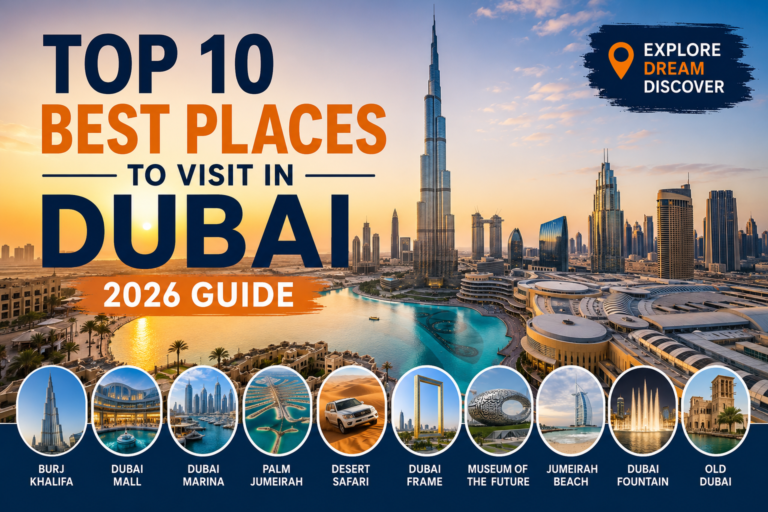
In simple terms: Booking for Dubai Contact On WhatsApp Visit Dubai Top !0 Places
Smart tourism means a journey that adapts to you, not you adapting to the journey.

From Traditional to Smart Tourism
For most of human history, travel was slow, physical, and deeply personal. It began with paper maps, handwritten hotel bookings, and word-of-mouth recommendations from local guides. Travelers depended heavily on human experience, instinct, and sometimes pure luck to discover new places.
This was the Traditional Tourism Era — a world where journeys were less predictable, but often more intimate. You explored cities without algorithms suggesting what to see next, and you experienced destinations exactly as they were, untouched by digital personalization.
Then came the Digital Tourism Revolution. The rise of the internet changed everything. Suddenly, flights could be booked in seconds, hotels compared instantly, and destinations explored through online reviews and social media. Travel became faster, easier, and more accessible to millions across the world.
But today, we are entering something far more advanced — the Smart Tourism Era.
This is not just an upgrade of technology; it is a complete redefinition of how travel works. Artificial intelligence now predicts traveler behavior before booking even begins. Smart airports process passengers using biometrics instead of passports. Hotels adapt rooms automatically based on personal comfort preferences. Cities respond in real time to tourist movement, traffic, and demand.
In this new era, travel is no longer something you plan and execute — it is something that intelligently adapts to you in real time.
From traditional exploration to fully connected smart ecosystems, tourism has evolved into a seamless fusion of technology, personalization, and human experience. And as this transformation accelerates, one thing becomes clear: the future of travel is not just digital — it is intelligent, predictive, and deeply human-centered.
Traditional Tourism Era
- Manual bookings
- Printed maps
- Human-guided tours
- Limited personalization
Digital Tourism Era
- Online bookings
- Travel apps
- GPS navigation
- Review-based decisions
Smart Tourism Era
- AI travel planning
- Smart hotel automation
- Biometric airports
- Real-time personalization
- Immersive AR/VR experiences
We are currently transitioning from digital tourism to fully intelligent tourism ecosystems.
The Brain of Future Travel
Artificial Intelligence is the backbone of smart tourism. There was a time when travel decisions were made with guidebooks, instinct, and a bit of uncertainty. Today, that era is fading fast. In its place rises a powerful invisible force that is quietly reshaping every stage of the journey—Artificial Intelligence, the true brain of future travel.
From the moment a traveler begins searching for inspiration to the second they return home, AI is now working behind the scenes—learning preferences, predicting needs, and designing experiences that feel almost human in their intuition. It doesn’t just support travel anymore; it orchestrates it.
In this new world of smart tourism, the traveler is no longer planning every detail manually. Instead, the journey is being continuously refined in real time—flights optimized, hotels personalized, attractions recommended, and even hidden local experiences suggested based on mood, behavior, and context.
What once felt like decision-making is now becoming decision intelligence.
AI has effectively become the silent architect of modern tourism—analyzing millions of data points to ensure that every trip feels effortless, personalized, and deeply meaningful. Whether it’s a luxury desert retreat in Dubai or a cultural walk through a historic European city, the system learns, adapts, and improves every experience as it happens.
This is why AI is often called the brain of future travel—because it doesn’t just respond to travelers; it understands them.
AI now powers:
- Personalized travel itineraries
- Dynamic pricing for flights and hotels
- Chatbot travel assistants
- Predictive travel behavior analysis
- Smart recommendations based on preferences
For example, if you usually prefer cultural heritage sites over luxury shopping, AI systems will automatically design your itinerary around museums, historic districts, and local experiences.
This level of personalization was unimaginable a decade ago.
The Future of Seamless Travel
Airports are becoming fully automated ecosystems.
Modern smart airports now include:
Biometric Check-ins
Facial recognition replaces passports at multiple checkpoints.
AI Security Screening
Faster and more accurate threat detection.
Smart Luggage Systems
Real-time tracking of baggage using IoT chips.
Digital Wayfinding
Interactive screens guiding passengers in real time.
The goal is simple: zero friction travel.
Smart Hotels & Robotics in Hospitality
Hotels are also undergoing a technological revolution.
In leading smart hotels, you may encounter:
- Robot room service delivery
- AI-powered concierge services
- Voice-controlled rooms
- Smart lighting and climate systems
- Automated check-in kiosks
- Personalized guest preferences stored in cloud systems
In countries like Japan, Dubai, and Singapore, robotic hospitality is already part of the guest experience.
However, the human touch still remains essential in luxury hospitality, creating a hybrid model of human + machine service.
The Rise of Immersive Travel Experiences
Augmented Reality (AR) and Virtual Reality (VR) are redefining how travelers explore destinations.
Virtual Tourism
Virtual Tourism is reshaping the very meaning of travel by allowing people to explore destinations, cultures, and experiences without physically being there. Using technologies like Virtual Reality (VR), Augmented Reality (AR), 360-degree videos, and AI-powered simulations, travelers can now walk through ancient cities, visit world-famous landmarks, and experience museums as if they were actually on-site.
What once felt like science fiction has now become a powerful part of the global tourism industry. From standing inside the Pyramids of Giza to walking through the streets of Paris, or exploring underwater coral reefs, Virtual Tourism brings the world directly to your screen with remarkable realism.
This new form of travel is not replacing physical tourism—but expanding it. It allows travelers to preview destinations before booking, helps people with mobility limitations experience global attractions, and supports education, cultural preservation, and sustainable travel by reducing over-tourism in sensitive areas.
In the era of Smart Tourism and Future Experiences, Virtual Tourism acts as a bridge between imagination and reality. It transforms travel into something more accessible, more intelligent, and more immersive than ever before.
AR City Guides
AR City Guides use Augmented Reality (AR) to turn your smartphone into a live travel companion. When you point your camera at a landmark, street, or monument, it instantly overlays useful information—such as history, facts, directions, reviews, and hidden stories—directly onto your screen.
Instead of reading from a guidebook, travelers can now see the city come alive in real time, making exploration more interactive, educational, and immersive.
From museums to historic streets, AR City Guides are transforming how tourists navigate destinations by blending the physical world with digital intelligence—making travel smarter, faster, and far more engaging.
VR Museum Tours
VR Museum Tours use Virtual Reality (VR) technology to allow travelers to experience world-famous museums and historical collections from anywhere in the world. With a VR headset or even a smartphone, visitors can walk through galleries, zoom into artworks, and explore ancient artifacts as if they were physically inside the museum.
This innovation removes geographical limits, making cultural education more accessible and inclusive. From the Louvre in Paris to the British Museum in London, users can experience priceless collections in full 360-degree immersion.
VR Museum Tours are not just a digital replacement—they are an enhancement of cultural tourism, offering deeper storytelling, interactive learning, and a powerful way to preserve global heritage in a virtual space.
Smart Cities and Tourism Integration
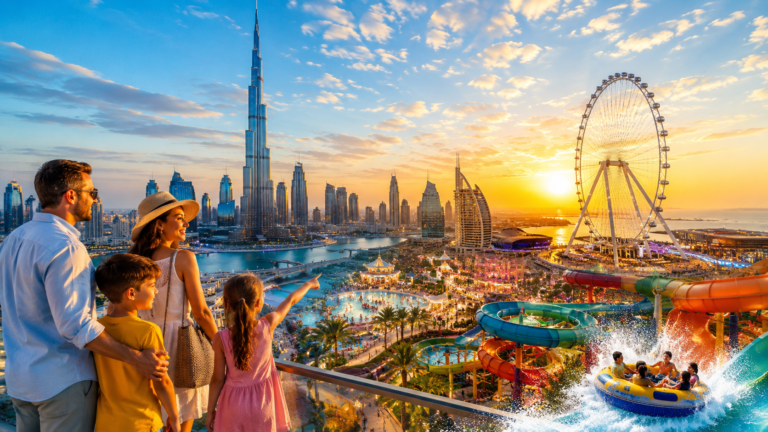
Dubai stands today as one of the world’s most advanced examples of how smart cities and tourism integration can redefine the entire travel experience. Here, technology is not just an add-on—it is the invisible infrastructure that shapes how millions of visitors move, explore, and interact with the city every year.
From AI-powered public services to cashless payments, real-time navigation systems, and intelligent transport networks, Dubai has transformed itself into a fully connected tourism ecosystem where every part of the journey is designed to be seamless, efficient, and highly personalized.
What makes Dubai truly stand out is the way tourism and urban technology operate as a single system. Visitors arriving at the airport are guided through biometric immigration systems, while smart transport apps suggest the fastest routes to hotels, attractions, and cultural landmarks like Al Fahidi Historical Neighborhood or Dubai Creek. Even crowd management at popular destinations is optimized using real-time data analytics.
In areas like Downtown Dubai and Dubai Marina, smart sensors help manage traffic flow and tourist density, ensuring smoother mobility during peak seasons. Meanwhile, digital tourism platforms allow travelers to book experiences, access city guides, and receive AI-based recommendations tailored to their interests—whether it’s luxury shopping, desert adventures, or cultural heritage exploration.
Dubai’s vision of smart tourism is not just about convenience—it is about creating a city that responds intelligently to every traveler’s needs in real time. In this model, tourism becomes dynamic, adaptive, and deeply personalized, setting a global benchmark for the future of urban travel.
As smart cities continue to evolve worldwide, Dubai remains a leading example of how technology and tourism can merge to create a next-generation travel experience where the city itself becomes a living, responsive guide.
These cities integrate:
- Smart transport systems
- Real-time crowd management
- AI traffic control
- Digital tourist assistance kiosks
- Cashless payment ecosystems
Dubai, in particular, is evolving into a fully connected tourism ecosystem where visitors can navigate, explore, and experience the city using integrated digital platforms.
The End of One-Size-Fits-All Tourism
The era of one-size-fits-all tourism is quietly disappearing, replaced by a new generation of travel experiences shaped by data, artificial intelligence, and real-time personalization. In traditional tourism, travelers were offered the same itineraries, the same hotel recommendations, and the same “top 10 things to do” lists—regardless of who they were or what they truly wanted.
Today, that approach no longer works.
In the age of Smart Tourism, every journey is becoming uniquely personal. AI systems now analyze traveler preferences, search behavior, past trips, budget patterns, and even real-time location data to design experiences that feel individually crafted. Two people arriving in the same city—whether it’s Dubai, Singapore, or Tokyo—will no longer receive identical travel plans. Instead, each itinerary is dynamically built around personal interests, from cultural heritage and luxury shopping to adventure tourism or wellness escapes.
This shift marks a major transformation in global tourism: from mass experiences to hyper-personalized journeys. Smart hotels adjust room settings automatically based on guest behavior. Travel apps recommend hidden gems instead of overcrowded attractions. Even transportation systems suggest routes that match a traveler’s pace and comfort level.
The result is a more meaningful form of travel where destinations are no longer consumed in the same way by everyone—they are experienced differently by each individual. In this new landscape, tourism becomes less about following a fixed plan and more about living a travel experience that evolves with you in real time.
- Interests
- Budget
- Travel history
- Social media behavior
- Real-time preferences
This means no two travelers will have the same experience in the future.
A couple seeking romance and a solo traveler seeking adventure will receive completely different itineraries—even if they visit the same destination.
Where Technology Meets Responsible Travel
Sustainable Smart Tourism represents the next evolution of global travel—where advanced technology and environmental responsibility work together to protect destinations while enhancing visitor experiences. In this model, tourism is no longer measured only by comfort or convenience, but also by its impact on nature, local communities, and cultural heritage.
Powered by AI, IoT, and data-driven systems, smart tourism now helps destinations manage resources more efficiently. Hotels reduce energy consumption through intelligent climate control systems, cities monitor tourist flow to prevent overcrowding, and transport networks optimize routes to lower carbon emissions. Even attractions use real-time data to protect fragile ecosystems and heritage sites from over-tourism.
Destinations like Dubai, Singapore, and Barcelona are already leading this transformation by integrating sustainability into their smart city frameworks. From digital ticketing systems that reduce paper waste to AI-guided crowd management at popular landmarks, technology is actively supporting greener travel behavior.
For modern travelers, sustainability is also becoming a personal choice. Smart travel platforms now suggest eco-friendly hotels, carbon-neutral flights, and low-impact experiences, allowing tourists to make responsible decisions without sacrificing comfort.
In essence, Sustainable Smart Tourism is redefining luxury and convenience. It proves that the future of travel is not only intelligent and personalized—but also deeply respectful of the planet we explore.
- Energy consumption in hotels
- Water waste
- Carbon emissions from transport
- Overcrowding in tourist hotspots
AI also helps manage tourist flow in sensitive cultural and natural sites, protecting heritage and ecosystems.
Real-World Examples of Smart Tourism
Dubai (UAE)
- AI-driven government services
- Smart police stations
- Digital tourism apps
- Autonomous transport initiatives
Singapore
- Smart airport (Changi)
- Cashless ecosystem
- AI-powered city management
Japan
- Robot hotels
- Smart train systems
- AR cultural guides
Spain (Barcelona)
- Smart traffic systems
- Tourist crowd management
- IoT-enabled public spaces
Pros & Cons of Smart Tourism
Pros
- Faster travel experience
- High personalization
- Better safety systems
- Efficient transportation
- Enhanced accessibility
Cons
- Privacy concerns
- Over-dependence on technology
- Reduced human interaction
- Digital divide issues
Frequently Asked Questions
What is smart tourism?
Smart tourism uses technology like AI, IoT, and AR/VR to improve travel experiences.
Is smart tourism already used today?
Yes, many countries already use smart airports, AI hotels, and digital travel systems.
Will AI replace travel agents?
Not fully. AI will assist, but human expertise will still matter for complex travel planning.
What is the future of tourism?
A fully digital, personalized, and immersive travel ecosystem powered by AI and smart infrastructure.
The Future of Travel is Intelligent
Smart tourism is not just a trend—it is a transformation of the entire travel industry.
The future traveler will not simply visit destinations; they will interact with them through intelligent systems that understand their preferences, needs, and emotions.
Yet despite all this technology, one truth remains unchanged:
Travel is still about human curiosity, connection, and discovery.
Technology may guide the journey, but the experience will always belong to the traveler.
And in this new era, the most successful destinations will be those that balance innovation with authenticity.
Because even in a world of smart cities and AI-powered tourism, the heart of travel will always remain beautifully human.